 Book a Call

Introduction to IT Security
In the modern digital landscape, IT security plays a pivotal role in protecting an organization's computer systems, networks, and digital data from unauthorized access, data breaches, and cyberattacks. It encompasses a broad range of technologies and security solutions designed to address vulnerabilities in digital devices, networks, servers, databases, and software applications. IT security is often confused with cybersecurity, which is a subset focusing primarily on digital threats such as ransomware, malware, and phishing scams.

Scope of IT Security
IT security extends beyond digital protection to include physical security measures like locks, ID cards, and surveillance cameras, which are essential for safeguarding buildings and devices housing critical data and IT assets. This comprehensive approach ensures that an organization's entire technical infrastructure is secure, including hardware systems, software applications, and endpoints like laptops and mobile devices.
Types of IT Security
Endpoint Security
Endpoint security is crucial for protecting end-users and endpoint devices such as desktops, laptops, cellphones, and servers from cyberattacks. It not only safeguards these devices but also prevents cybercriminals from using them to launch attacks on sensitive data and other assets. Endpoint security solutions often include antivirus software, firewalls, and intrusion detection systems to monitor and block malicious activities.
Network Security
Network security has three primary objectives: preventing unauthorized access to network resources, detecting and stopping cyberattacks in real-time, and ensuring secure access for authorized users. This is achieved through technologies like firewalls, intrusion detection systems (IDS), and intrusion prevention systems (IPS).
Application Security
Application security involves measures taken during the development stage to protect software and devices from threats. This includes writing secure code, designing secure application architectures, and implementing robust data input validation to minimize unauthorized access or modification.
Cloud Security
Cloud security focuses on securing cloud-based infrastructure, applications, and data. It operates on a shared responsibility model where the cloud service provider secures the infrastructure, and the customer is responsible for securing the applications and data running on it.
Threats to IT Security
Organizations face a wide range of threats, both internal and external. External threats include cybercriminals and state actors, while internal threats often involve employees who may accidentally or intentionally compromise security. IT security strategies must account for these diverse threats and their varying motivations and tactics.

Implementing IT Security Measures
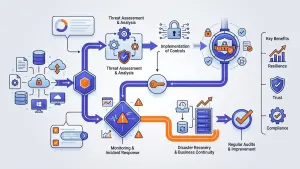
Effective IT security requires a combination of technologies, processes, and employee training. Security awareness training is essential for teaching employees to recognize security threats and adopt secure workplace habits. Additionally, multi-factor authentication is critical for preventing unauthorized access, even if a hacker obtains a legitimate username and password.

Technologies in IT Security
Several technologies play a crucial role in detecting and mitigating cyber threats:
- Email Security Tools: These include AI-based anti-phishing software and secure email gateways to protect against spam and malicious emails.
- Antivirus Software: Used to neutralize malware and spyware.
- System and Software Patches: Essential for closing technical vulnerabilities exploited by hackers.
- Threat Detection and Response Solutions: Utilize analytics, AI, and automation to identify and respond to threats.
Offensive Security Operations
Offensive security involves ethical hacking techniques like penetration testing and red teaming to uncover vulnerabilities and strengthen defensive measures. These methods simulate cyberattacks to identify weaknesses in systems and user security awareness.
The Importance of IT Security in Business
In today's interconnected world, a single security breach can have devastating consequences, including financial losses, damaged reputations, and regulatory fines. Therefore, investing in robust IT security strategies is not only a necessity but a strategic business decision. It helps organizations maintain trust with customers, protect sensitive data, and ensure continuity of operations.
Future of IT Security
As technology evolves, so do cyber threats. The future of IT security will involve more sophisticated technologies like AI and machine learning to detect and respond to threats in real-time. Organizations must stay vigilant and adapt their security strategies to address emerging threats and protect their digital assets effectively.
Written by

Frequently Asked Questions
Employee training is essential for IT security as it teaches employees to recognize security threats and adopt secure workplace habits.
Offensive security involves ethical hacking techniques such as penetration testing and red teaming to uncover vulnerabilities and strengthen defensive measures.
Multi-factor authentication is important because it prevents unauthorized access even if a hacker obtains a legitimate username and password.
Start with the fundamentals: multi-factor authentication on all accounts, a password manager for the team, regular software updates, and employee security awareness training. These four measures prevent the majority of common attacks. More advanced controls like SIEM monitoring and penetration testing come after the basics are solid.
Industry guidance suggests 5 to 10% of your IT budget, but for most SMBs the real answer depends on your risk profile. Companies handling sensitive data (health records, financial information, customer PII) need more investment. A security assessment from a fractional CTO can identify your specific gaps and prioritize spending where it matters most.
Business email compromise (BEC) and phishing attacks. These do not require sophisticated hacking. They rely on tricking an employee into clicking a link, sharing credentials, or approving a fraudulent payment. Training and multi-factor authentication are the most effective defenses.
By partnering with us, you can expect improved efficiency, increased competitiveness, enhanced customer experiences, and the ability to adapt and thrive in a rapidly evolving digital landscape. Our goal is your success.
Yes, we tailor our services to meet the unique needs of various industries, ensuring that solutions are aligned with specific regulatory and operational requirements.
We have done projects in the most diverse industries possible, including but not limited to Services, Finance, Manufacturing, Health, Education, Food & Beverage and Technology.
Yes, our solutions are highly customizable to meet your specific requirements and needs. We work closely with our clients to deliver tailored solutions.
To begin your journey with Reyem Technologies, simply reach out to us through our email or book a call with us. We'll be happy to discuss your needs and explore how our services can benefit your organization's goals.
You can contact us through the contact form on our website or by sending an email to contact@reyem.tech .