 Book a Call

Introduction to Startup Technology Guidance
In the rapidly evolving landscape of technology, startups face numerous challenges and opportunities. The journey from conceptualizing an idea to launching a successful tech startup involves careful planning, strategic execution, and continuous innovation. This article delves into the essential elements of startup technology guidance, providing insights into how startups can navigate the complexities of the tech industry.

Crafting a Scalable Business Model
A scalable business model is the backbone of any successful tech startup. It outlines how the company creates, delivers, and captures value, ensuring that growth can occur without exponentially increasing costs. Key components of a scalable model include innovation in product development, customer engagement strategies, and revenue streams. For instance, top tech startups have achieved long-term growth by focusing on these elements and securing early investment from angel investors and venture capitalists.
Lean Startup Methodology
The lean startup methodology, popularized by Eric Ries, emphasizes iterative growth based on user feedback. This approach involves developing a Minimum Viable Product (MVP) to test market interest and gather feedback early on. By starting lean, startups can avoid unnecessary legal and organizational complexities, focusing instead on building a product that meets market needs.
Building a Skilled Team
A unified and skilled founding team is crucial for the success of a tech startup. This team should include both technical and non-technical members who share a common vision and are passionate about the project. For non-technical founders, it's essential to collaborate with a Chief Technology Officer (CTO) who can bring the vision to life without incurring significant technology costs upfront.
Market Research and Validation
Market research is vital for validating a startup's business idea. This involves examining the market to understand consumer needs, identifying target audiences, and analyzing competitors. By conducting thorough market research, startups can develop a robust value proposition and launch strategy that resonates with their target consumers.
Funding and Growth Strategies
Securing funding is a critical step for tech startups looking to scale. This can involve pitching to investors, securing venture capital, or exploring alternative funding avenues. Effective growth strategies also include developing agile methodologies to adapt quickly to market changes and customer feedback.
Navigating Legal and Intellectual Property Considerations
Protecting Intellectual Property
Protecting intellectual property (IP) is essential for tech startups, as it often represents a major asset for the company. This involves filing patent applications before public disclosure to ensure that the startup retains exclusive rights to its innovations. The Harvard Office of Technology Development provides guidance on IP protection and licensing agreements, which are crucial for securing investor confidence.
Legal Considerations
Legal considerations, such as company registration and tax compliance, are critical to avoid legal issues that could hinder a startup's growth. Choosing an appropriate name and ensuring compliance with all legal requirements from the outset can save startups from costly mistakes later on.
Digital Transformation and IT Consulting
In today's digital age, digital transformation plays a pivotal role in the success of tech startups. This involves leveraging technology to enhance business operations, improve customer experiences, and drive innovation. IT consulting services can help startups navigate this transformation by providing expert guidance on systems implementation, software development, and strategic IT planning. By integrating these elements, startups can position themselves for sustained growth and competitiveness in the market.

Systems and Software Implementation
Implementing the right systems and software is crucial for startups to streamline operations and improve efficiency. This involves selecting technologies that align with the startup's business model and growth strategy. Effective implementation requires careful planning, ensuring that all systems are integrated seamlessly to support the startup's operations and customer interactions.
Innovation and Continuous Improvement
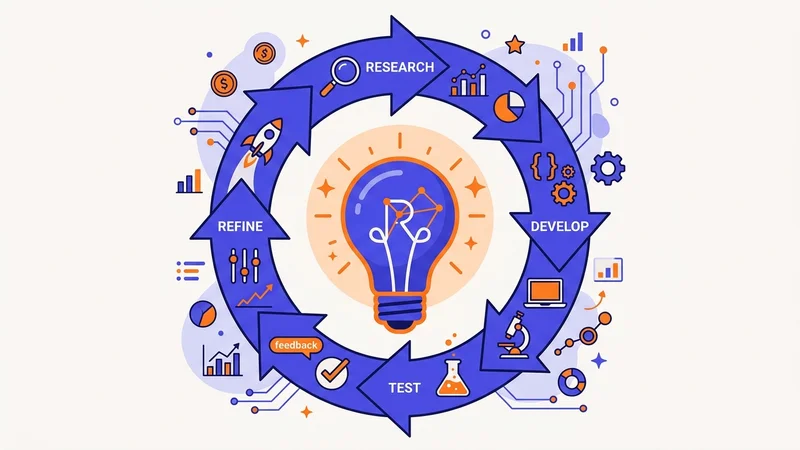
Innovation is the driving force behind successful tech startups. Continuous improvement involves staying abreast of industry trends, adapting to customer feedback, and iterating on products and services to meet evolving market needs. By fostering a culture of innovation and embracing change, startups can maintain their competitive edge and achieve long-term success.
Networking and Mentorship
Networking with other entrepreneurs and industry experts can provide valuable insights and opportunities for growth. Mentorship programs offer guidance and support, helping startups navigate challenges and make informed decisions. The Harvard Office of Technology Development, for example, provides mentorship and networking opportunities for aspiring entrepreneurs.
Agile Methodology and Iteration
Adopting an agile methodology allows startups to respond quickly to market changes and customer feedback. This involves continuous iteration and improvement of products and services, ensuring that they remain relevant and competitive. By embracing agility, startups can accelerate their growth and adapt to the ever-changing tech landscape.
Related: Startup Advisory Program | Fractional CTO Services
Written by

Frequently Asked Questions
The article focuses on providing guidance for startups in the technology sector, covering essential elements such as crafting a scalable business model, lean startup methodology, team building, market research, funding strategies, legal considerations, digital transformation, and innovation.
A scalable business model for tech startups involves creating, delivering, and capturing value in a way that allows growth without exponentially increasing costs. It includes innovation in product development, customer engagement strategies, and revenue streams.
The lean startup methodology emphasizes iterative growth based on user feedback. It involves developing a Minimum Viable Product (MVP) to test market interest early on and avoid unnecessary complexities.
A skilled and unified founding team is crucial for the success of a tech startup. It should include both technical and non-technical members who share a common vision and are passionate about the project.
Market research is vital for validating a startup's business idea by examining the market to understand consumer needs, identifying target audiences, and analyzing competitors.
Tech startups typically secure funding by pitching to investors, securing venture capital, or exploring alternative funding avenues such as crowdfunding or angel investors.
Protecting intellectual property is essential for tech startups as it often represents a major asset for the company. This involves filing patent applications before public disclosure to retain exclusive rights to innovations.
Digital transformation plays a pivotal role in the success of tech startups by leveraging technology to enhance business operations, improve customer experiences, and drive innovation.
Networking with other entrepreneurs and industry experts, along with mentorship programs, can provide valuable insights and opportunities for growth, helping startups navigate challenges and make informed decisions.
Adopting an agile methodology allows tech startups to respond quickly to market changes and customer feedback, ensuring continuous iteration and improvement of products and services.
Three decisions have the highest long-term cost if you get them wrong: your tech stack (language, framework, database), your architecture pattern (monolith vs microservices), and your first two engineering hires. A fractional CTO can guide all three for a fraction of what a wrong choice costs to fix later.
Build what differentiates you. Buy everything else. If your competitive advantage is in your product's unique workflow, build that. But do not build your own authentication, payment processing, email delivery, or hosting infrastructure. Use proven SaaS tools for commoditized functions and invest your engineering time in what makes your product different.
When technology decisions start affecting business outcomes. For most startups, that is before the first line of code is written. You do not need a full-time CTO at the pre-seed stage. A fractional CTO at 10-20 hours per week sets the architecture, hires the first engineers, and ensures the technical foundation supports your growth plan.
By partnering with us, you can expect improved efficiency, increased competitiveness, enhanced customer experiences, and the ability to adapt and thrive in a rapidly evolving digital landscape. Our goal is your success.
Yes, we tailor our services to meet the unique needs of various industries, ensuring that solutions are aligned with specific regulatory and operational requirements.
We have done projects in the most diverse industries possible, including but not limited to Services, Finance, Manufacturing, Health, Education, Food & Beverage and Technology.
Yes, our solutions are highly customizable to meet your specific requirements and needs. We work closely with our clients to deliver tailored solutions.
To begin your journey with Reyem Technologies, simply reach out to us through our email or book a call with us. We'll be happy to discuss your needs and explore how our services can benefit your organization's goals.
You can contact us through the contact form on our website or by sending an email to contact@reyem.tech .
New Articles

Jun 18, 2025
Startup CTO Guidance: Navigating Technology Leadership
The startup CTO role explained — strategic leadership, innovation management, and aligning technology with business objectives.
Read article
Oct 16, 2025
Startup Technology Guidance
Essential technology guidance for startups — strategies for success from idea validation through scaling and sustainable growth.
Read article