 Book a Call
Introduction to Digital Transformation
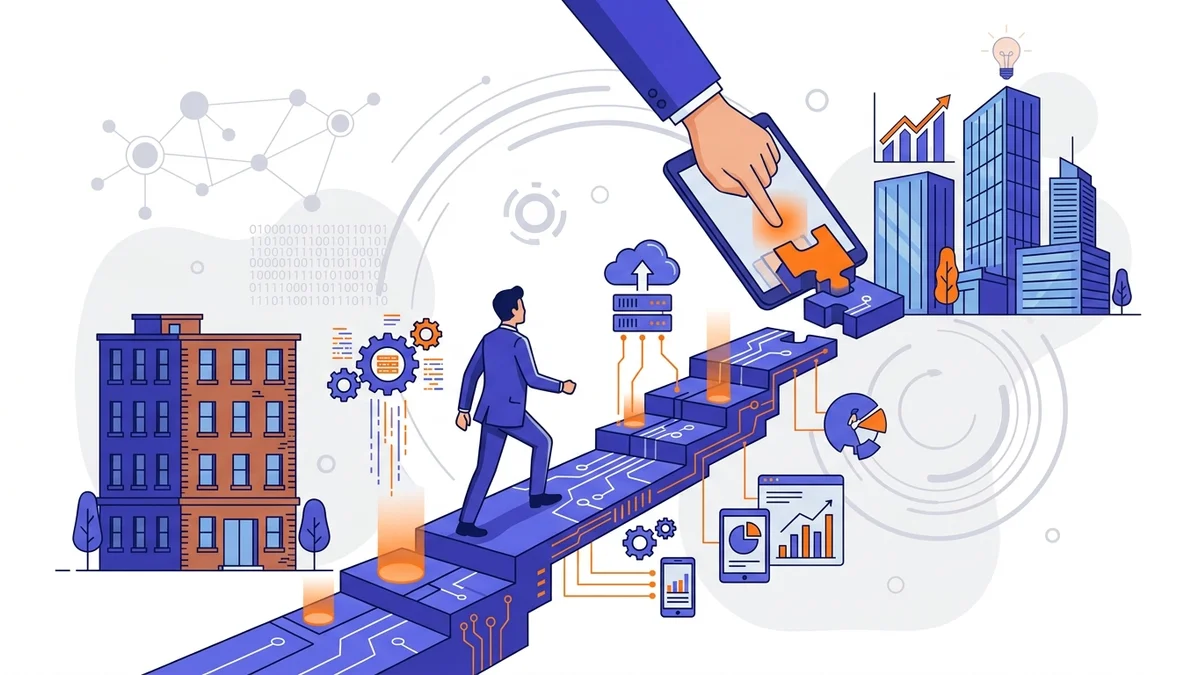
Digital transformation is a comprehensive business strategy that involves integrating digital technologies into all facets of an organization. This process is not just about adopting new technologies; it's about fundamentally changing how businesses operate, deliver value to customers, and interact with stakeholders. Digital transformation is an ongoing journey, characterized by the continuous adoption of new technologies and the optimization of processes and systems to maintain competitiveness in a rapidly evolving market.
In today's digital-first world, organizations must embrace digital transformation to remain relevant and competitive. This involves leveraging technologies like artificial intelligence (AI), cloud computing, and mobile devices to streamline operations, enhance customer experiences, and drive innovation.

Key Components of Digital Transformation
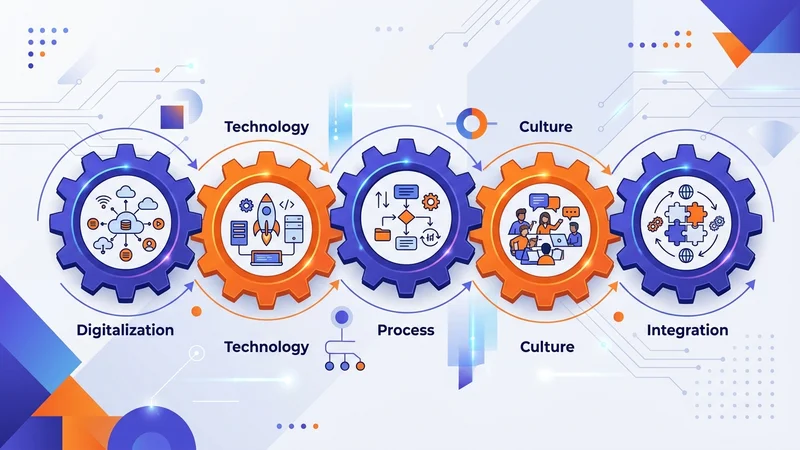
Digital transformation encompasses several key components, including digitalization, digitization, technology integration, process optimization, and cultural change.
Digitalization and Digitization
- Digitalization involves using digital technologies to improve processes and projects. It focuses on leveraging technology to enhance business operations and customer interactions.
- Digitization is the process of converting paper-based information into digital formats. This step is crucial for creating a digital foundation that supports further transformation efforts.
Technology Integration
Technology integration is at the core of digital transformation. It involves ensuring that different digital solutions are connected and work together seamlessly to support business strategies and operations. Effective integration enables organizations to leverage technology to drive innovation and efficiency across all departments.
Process Optimization
Process optimization involves assessing and improving all operational processes. This includes identifying manual processes that can be automated and eliminating outdated ones. By integrating processes, organizations can achieve seamless workflows and optimal efficiencies.
Cultural Change
Cultural change is essential for successful digital transformation. It requires management to champion digital initiatives and communicate their value to all employees. This involves providing training and support to ensure that employees can effectively adopt new systems and processes.
Major Areas of Digital Transformation
Digital transformation focuses on several key domains:

Customer Experience
The customer experience domain is centered on understanding and meeting customer needs. By leveraging digital technologies, organizations can deliver personalized experiences, enhance customer satisfaction, and increase customer loyalty.
Operational Processes
This domain involves using technology to automate and optimize operational processes. By streamlining operations, organizations can increase productivity, reduce costs, and improve overall efficiency.
Business Models
Digital transformation can lead to new business models by leveraging technology to adapt to evolving market requirements and customer demands. This includes creating entirely new revenue streams through digital channels.
Workforce Enablement
Workforce enablement involves empowering employees with the tools and training needed to drive digital transformation. By fostering a culture of innovation, organizations can encourage employee engagement and adoption of new technologies.
The Role of AI in Digital Transformation
Artificial intelligence (AI) plays a significant role in digital transformation by enabling advanced analytics, automating complex tasks, and providing actionable insights. AI-powered solutions can enhance customer engagement, improve decision-making, and support cybersecurity efforts.
Applications of AI in Digital Transformation
AI is applied in various areas of digital transformation, including:
- Customer Engagement: AI helps predict consumer demands and supports omnichannel experiences.
- Decision Making: AI provides predictive analytics for faster and better decision-making.
- Cybersecurity: AI-powered security solutions detect and mitigate threats.
- Revenue Opportunities: AI identifies patterns and trends to speed up time-to-market for new products.
Implementing Digital Transformation
Implementing digital transformation involves several strategic steps:
Assessing Current State
The first step is assessing the organization's current digital state. This involves evaluating existing resources, identifying areas for improvement, and determining the budget for digital transformation efforts.
Defining a Digital Strategy
A successful digital transformation requires a well-defined strategy. This includes establishing clear objectives, identifying executive sponsors, and assembling a team with the necessary skills.
Investing in Technology and Talent
Organizations must invest in the right technology and talent to support digital transformation. This includes adopting AI, cloud computing, and other digital tools, as well as building a skilled digital workforce.
Fostering a Culture of Change
Digital transformation requires a culture that embraces change and innovation. This involves engaging employees in the transformation process, encouraging experimentation, and rewarding innovation.
Benefits of Digital Transformation
Digital transformation offers numerous benefits, including increased operational efficiency, enhanced customer experiences, and improved competitiveness. It also enables organizations to innovate continuously and respond quickly to market changes.
Competitive Advantage
By embracing digital transformation, organizations can achieve a competitive advantage. This involves leveraging technology to create new business models, improve decision-making, and enhance customer relationships.
Employee Engagement
Digital transformation can improve employee engagement by providing access to the latest tools and technologies. This fosters a culture of innovation where employees are encouraged to experiment and learn continuously.
Cybersecurity and Risk Management
Digital transformation also involves addressing cybersecurity challenges. By adopting AI-powered security solutions, organizations can better detect and respond to threats, reducing the risk of successful attacks.
Challenges and Opportunities
While digital transformation presents numerous opportunities, it also comes with challenges. Organizations must navigate issues like legacy technology, cybersecurity risks, and cultural resistance to change. However, by leveraging the right technologies and strategies, businesses can overcome these challenges and unlock new opportunities for growth and innovation.
Legacy Technology
Legacy technology can be a significant barrier to digital transformation. Organizations must assess and modernize their technology stack to support new digital initiatives.
Cybersecurity Risks
The increased use of digital technologies also expands an organization's digital attack surface. However, AI-powered security solutions can help mitigate these risks.
Cultural Resistance
Cultural resistance is another challenge. Effective change management and communication are crucial for overcoming resistance and fostering a culture that supports digital transformation.
Related: Digital Transformation Services | Fractional CTO Services
Written by

Frequently Asked Questions
Digital transformation presents challenges such as legacy technology, cybersecurity risks, and cultural resistance to change.
Organizations can overcome the challenges of digital transformation by modernizing their technology stack, implementing AI-powered security solutions, and fostering a culture that supports change and innovation.
Most digital transformation initiatives for small businesses take 12 to 24 months from initial assessment to measurable results. The timeline depends on the scope: a focused project like integrating disconnected systems might take 3 to 6 months, while a full technology overhaul across operations takes longer. The key is starting with a technology assessment to prioritize what to fix first.
The first step is a technology assessment that maps your current systems, identifies gaps, and quantifies the cost of manual processes and disconnected tools. Without this baseline, you are making technology decisions blind. The assessment typically takes 4 to 8 weeks and produces a prioritized roadmap.
Costs vary widely based on scope. A technology assessment and roadmap runs $15,000 to $30,000. Implementing an ERP system costs $30,000 to $100,000 depending on the vendor. Ontario businesses may qualify for up to $115,000 in government funding through the DMAP and TDP programs to offset these costs.
You need someone with senior technology leadership experience to guide the process. That does not have to be a full-time hire. A fractional CTO at $8,000 to $15,000 per month can lead the assessment, define the roadmap, evaluate vendors, and oversee implementation without the $300,000+ annual cost of a permanent executive.
By partnering with us, you can expect improved efficiency, increased competitiveness, enhanced customer experiences, and the ability to adapt and thrive in a rapidly evolving digital landscape. Our goal is your success.
Yes, we tailor our services to meet the unique needs of various industries, ensuring that solutions are aligned with specific regulatory and operational requirements.
We have done projects in the most diverse industries possible, including but not limited to Services, Finance, Manufacturing, Health, Education, Food & Beverage and Technology.
Yes, our solutions are highly customizable to meet your specific requirements and needs. We work closely with our clients to deliver tailored solutions.
To begin your journey with Reyem Technologies, simply reach out to us through our email or book a call with us. We'll be happy to discuss your needs and explore how our services can benefit your organization's goals.
You can contact us through the contact form on our website or by sending an email to contact@reyem.tech .