 Book a Call
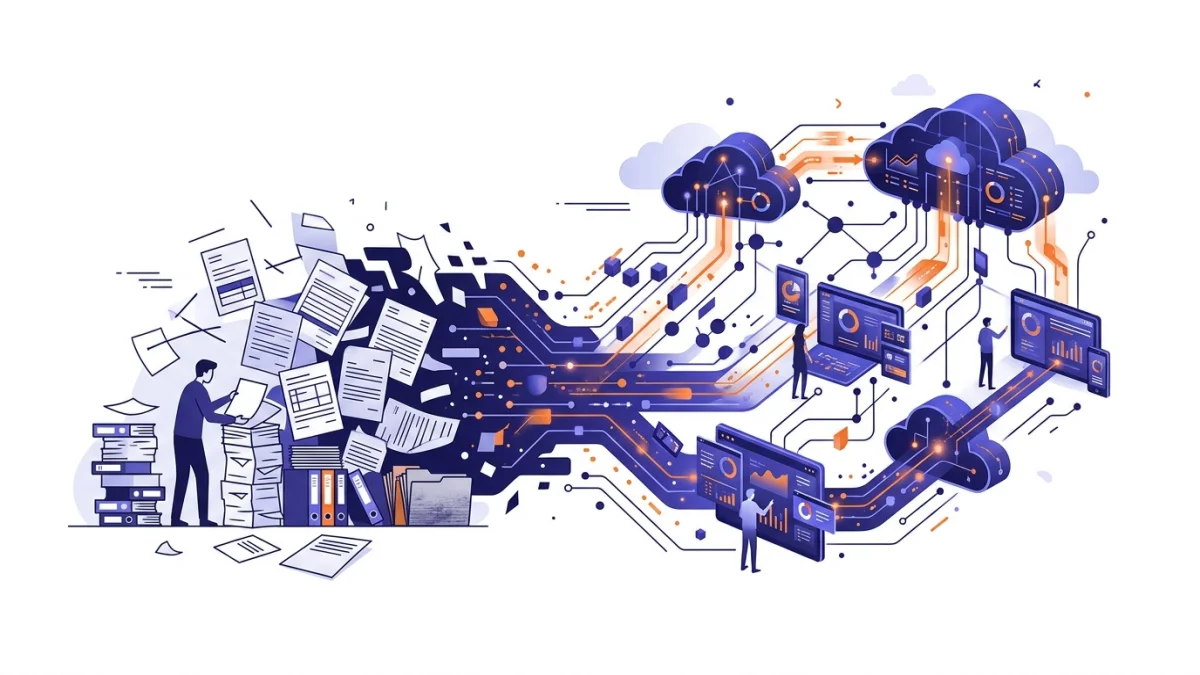
The term digital transformation has been stripped of meaning by consultants, software vendors, and conference keynotes. Every SaaS company claims to enable it. Every analyst report says you need it. Nobody tells you what it actually involves when you sit down Monday morning and try to do it.
I'm Mario Meyer. I've led digital transformation projects across manufacturing, professional services, healthcare, fintech, and logistics — over 25 years, in companies ranging from 10 to 10,000 employees. Through Reyem Tech, I help Canadian businesses navigate this process without the six-figure consulting deck that gathers dust on a shelf.
This guide is what I wish every CEO and VP of Operations had before they signed that enterprise software contract or hired that "transformation team." It's long because the topic is genuinely complex. But every section earns its space.
What Digital Transformation Actually Means
Digital transformation is the process of rebuilding how your company operates — its workflows, customer interactions, data systems, and decision-making processes — around modern technology instead of around legacy habits.
That's it. Not "leveraging the cloud to synergize stakeholder value." Not a product you buy. Not a project with a start and end date.
It is an ongoing shift in how work gets done. The company that mailed invoices and tracked inventory in spreadsheets in 2015 now uses automated billing, real-time warehouse management, and predictive demand forecasting. That shift didn't happen in one project. It happened through dozens of intentional decisions about technology, process, and people — made over years.
The word "transformation" trips people up because it implies a dramatic before-and-after. In reality, most successful digital transformation looks incremental. You replace one system. You automate one workflow. You connect two data sources that were siloed. Each step compounds. After two years, you look back and realize you're running a fundamentally different operation.
Why Most Digital Transformations Fail — And How Yours Won't
McKinsey's data has been consistent for years: roughly 70% of digital transformation initiatives fail to reach their stated goals. Having watched this play out firsthand, I can tell you the failure modes are predictable:
Failure Mode 1: Starting with Technology Instead of Problems
The CEO reads about AI. The board asks why the company isn't using it. Someone buys a platform. Six months later, the platform is shelfware because nobody defined what problem it was solving.
How to avoid it: Start with the three processes that cost you the most time, money, or customer satisfaction. Map them. Find the bottlenecks. Then — and only then — evaluate technology that addresses those specific bottlenecks.
Failure Mode 2: Underestimating Change Management
New software is the easy part. Getting 200 employees to actually use it — and use it correctly — is where transformations die. I've seen companies spend $500K on a CRM implementation and still have sales reps tracking deals in personal spreadsheets two years later.
How to avoid it: Budget 30-40% of your transformation spend on training, communication, and organizational change. Not 5%. Not "we'll do a lunch and learn." Real, sustained change management with executive sponsorship.
Failure Mode 3: Boiling the Ocean
Trying to transform everything at once. New ERP, new CRM, new website, new data warehouse, new security posture — all in the same fiscal year. The organization can absorb about one major system change per quarter. Maybe two if you have a strong IT team.
How to avoid it: Sequence ruthlessly. Pick the initiative with the highest ROI and lowest organizational disruption. Deliver it. Build confidence. Then tackle the next one.
Failure Mode 4: No Executive Ownership
Transformation gets delegated to IT. IT doesn't have the authority to change business processes. Business units resist because nobody with a P&L told them this matters. The initiative stalls in committee.
How to avoid it: The CEO or COO must own the transformation. Not sponsor it. Own it. Show up to the weekly standup. Make the hard calls when departments resist. If the most senior person in the room is a project manager, you're in trouble.
The Four Phases of Digital Transformation
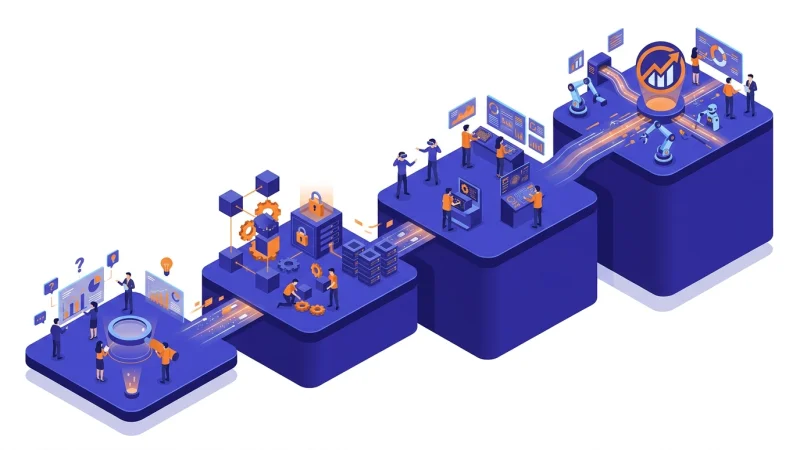
Every transformation I've led follows a similar arc, regardless of industry or company size.
Phase 1: Assessment and Strategy (4-8 weeks)
Audit your current technology stack, data flows, and business processes. Identify gaps between where you are and where your business strategy needs you to be. Produce a prioritized roadmap with clear ROI projections for each initiative.
This is where a fractional CTO earns their fee ten times over. The wrong assessment leads to the wrong roadmap, which leads to wasted years and millions. Getting this phase right is the single highest-leverage investment you'll make.
Phase 2: Foundation (3-6 months)
Build the infrastructure layer that everything else depends on. Cloud migration (or hybrid cloud setup). Data integration. Identity and access management. Security baseline. API strategy.
This phase is unglamorous and invisible to most of the organization. Executives get impatient because there's nothing to demo. But skipping it is like renovating the kitchen before fixing the foundation — everything you build on top will crack.
Phase 3: Capability Building (6-18 months)
Deploy the systems and automations that directly change how work gets done. This is where you implement the new ERP, launch the customer portal, automate the supply chain workflows, or deploy AI-driven analytics.
Each capability should deliver measurable value independently. Don't chain five initiatives together so that none of them work until all of them are done.
Phase 4: Optimization and Scale (ongoing)
Measure what's working. Double down on high-ROI initiatives. Retire what isn't delivering. Train the next wave of users. Expand successful pilots to additional business units or geographies.
This phase never ends. The companies that treat digital transformation as a project with a completion date are the ones that fall behind again in three years.
Technology Choices That Actually Matter
The technology landscape is overwhelming. Here's where to focus your attention and budget:
Cloud Infrastructure
If you're still running on-premises servers in 2026, you're paying too much and moving too slowly. Full stop. AWS, Azure, and GCP all offer mature platforms with Canadian data residency options — critical for companies subject to PIPEDA or provincial privacy legislation.
The choice between cloud providers matters less than the choice between good and bad architecture. A well-designed system on Azure will outperform a poorly designed system on AWS every time. Hire for architecture skills, not brand loyalty.
For companies that can't go fully cloud — regulated industries, data sovereignty requirements, existing hardware investments — hybrid cloud is the pragmatic middle ground.
AI and Machine Learning
AI is the most overhyped and simultaneously most underutilized technology in business today. Most companies don't need a custom large language model. They need:
- Automated document processing — extract data from invoices, contracts, and forms without manual entry
- Predictive analytics — forecast demand, churn, or maintenance needs using your existing data
- Intelligent search — let employees and customers find information without knowing exactly where it lives
- Process automation — use AI to handle routine decisions that currently require human judgment
Start with the use case that saves the most person-hours. Prove ROI. Then expand. Read the AI-driven insights guide for a deeper treatment.
Automation and Integration
The biggest immediate ROI in most digital transformation projects comes from connecting systems that currently don't talk to each other. Your CRM doesn't sync with your invoicing. Your inventory system doesn't feed your forecasting. Your HR platform doesn't connect to your project management tool.
Integration platforms (iPaaS) like n8n, Make, or enterprise options like MuleSoft can connect these systems in weeks, not months. The compound effect of eliminating manual data transfer between systems is enormous — typically 15-30% productivity improvement in affected workflows.
Cybersecurity
Every technology initiative expands your attack surface. If security is an afterthought — bolted on after the systems are live — you're building in risk that compounds over time.
Build security into every phase of your transformation. Budget for it. Staff for it. If you don't have internal security expertise, get a fractional CTO who understands security architecture. A breach during a transformation can set you back years.
Measuring ROI: How to Know It's Working
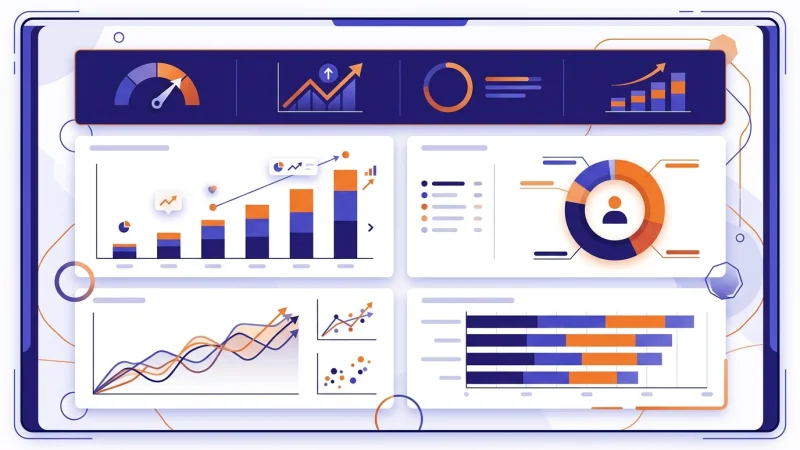
"We completed the digital transformation" is not a success metric. Here's what to measure:
Operational Metrics
- Process cycle time — how long does it take to complete key workflows (order-to-cash, quote-to-close, hire-to-productive)?
- Error rates — how often do manual data entry errors, system failures, or process exceptions occur?
- Employee productivity — revenue per employee, tasks completed per day, or time spent on manual vs. strategic work
Financial Metrics
- Cost reduction — direct savings from eliminated manual processes, reduced headcount in operational roles, or lower infrastructure costs
- Revenue impact — new revenue enabled by digital capabilities (e-commerce, self-service portals, data products)
- Time to market — how quickly can you launch new products, enter new markets, or respond to competitive threats?
Customer Metrics
- NPS / satisfaction scores — are digital interactions improving or degrading the customer experience?
- Self-service adoption — what percentage of customer interactions are handled without human involvement?
- Resolution time — how quickly are customer issues identified and resolved?
Set baselines before you start. Measure quarterly. Report to the board. If an initiative isn't moving the metrics after two quarters, kill it or fix it.

The Canadian Context
Canadian businesses face specific dynamics that affect digital transformation strategy:
Data Sovereignty and Privacy
PIPEDA and provincial privacy legislation (including Quebec's Law 25, which is stricter than PIPEDA) create real constraints on where data can be stored and processed. Any transformation involving customer data needs to account for Canadian data residency from day one — not as a retrofit.
AWS has data centres in Montreal and Calgary. Azure operates from Toronto and Quebec City. GCP has a Montreal region. All three offer compliant configurations, but you need to architect for it intentionally.
Government Funding Programs
Canada has unusually strong funding programs for digital transformation:
- DMAP (Digital Modernization Adoption Plan) — Ontario Centre of Innovation program providing funding for SMBs adopting digital tools and technology
- SR&ED — tax credits for eligible R&D work, including software development done as part of a transformation
- IRAP — NRC advisory services and funding for technology innovation
- BDC — advisory services and financing specifically structured for tech-driven companies
A fractional CTO who understands these programs can help you fund a significant portion of your transformation through grants and tax credits. We've helped clients recover 25-40% of their transformation costs through SR&ED alone.
Talent and Cost Structure
Canadian tech talent costs 20-40% less than equivalent US talent. That's a structural advantage for companies building in-house development teams or hiring consultants for transformation work. Toronto, Vancouver, Montreal, Calgary, and Ottawa all have deep pools of experienced technologists.
The trade-off: Canadian companies compete for that talent against US remote employers paying in USD. Building a transformation team requires competitive compensation and compelling work — not just lower cost of living arguments.
Who Should Lead Your Digital Transformation?
This is the most consequential decision you'll make. Your options:
Internal CTO/CIO — ideal if you have one. Most SMBs don't.
Management consulting firm — expensive ($300-$500/hour), good for strategy but often disconnected from execution. They leave a beautiful deck and no one to implement it.
Fractional CTO — strategic leadership at a fraction of the cost, with hands-on execution capability. Best fit for companies that need both the plan and the person who'll make sure it actually happens. See the complete guide to fractional CTO services.
Internal champion + external guidance — a capable internal leader paired with a fractional CTO for architecture decisions and strategic direction. Often the strongest model for mid-market companies.
Frequently Asked Questions
How long does digital transformation take?
There is no end date. The foundational work — assessment, cloud migration, core system replacement — typically takes 12-24 months. But transformation is an ongoing capability, not a project. Companies that stop after the initial push fall behind within 2-3 years.
How much does digital transformation cost?
Costs vary enormously by scope and company size. A small professional services firm might spend $50,000-$150,000 over 18 months. A mid-market manufacturer could invest $500,000-$2M. The better question is: what's the cost of NOT transforming? Usually it's declining margins, lost customers, and increasing operational costs.
Can we do digital transformation without a CTO?
You can, but the failure rate goes up significantly. Someone needs to own the technology strategy, evaluate vendors, architect systems, and hold the team accountable. That person doesn't have to be full-time — a fractional CTO can fill this role effectively — but the role must exist.
What's the difference between digital transformation and IT modernization?
IT modernization is a subset of digital transformation. Modernizing your servers, upgrading your ERP, or migrating to the cloud is IT modernization. Digital transformation includes those things but also encompasses process redesign, organizational change, customer experience, and business model evolution.
Is digital transformation relevant for small businesses?
Absolutely. In fact, small businesses often see the fastest ROI because they have less legacy complexity to untangle. A 20-person company that automates invoicing, implements a modern CRM, and builds a customer self-service portal can transform its operations in 6 months with a modest budget.
If your company is staring at a technology modernization challenge and you're not sure where to start, the answer is almost always the same: start with an honest assessment of where you are. I offer a free discovery call where we'll map your current situation and identify the highest-impact first step.
Book a call with Mario and let's figure out your transformation roadmap together.
Related: Digital Transformation Services | Fractional CTO Services | Book a Free Strategy Call
Written by

Frequently Asked Questions
There is no end date. The foundational work — assessment, cloud migration, core system replacement — typically takes 12-24 months. But transformation is an ongoing capability, not a project. Companies that stop after the initial push fall behind within 2-3 years.
Costs vary enormously by scope and company size. A small professional services firm might spend $50,000-$150,000 over 18 months. A mid-market manufacturer could invest $500,000-$2M. The better question is: what's the cost of NOT transforming? Usually it's declining margins, lost customers, and increasing operational costs.
You can, but the failure rate goes up significantly. Someone needs to own the technology strategy, evaluate vendors, architect systems, and hold the team accountable. That person doesn't have to be full-time — a fractional CTO can fill this role effectively — but the role must exist.
IT modernization is a subset of digital transformation. Modernizing your servers, upgrading your ERP, or migrating to the cloud is IT modernization. Digital transformation includes those things but also encompasses process redesign, organizational change, customer experience, and business model evolution.
Absolutely. In fact, small businesses often see the fastest ROI because they have less legacy complexity to untangle. A 20-person company that automates invoicing, implements a modern CRM, and builds a customer self-service portal can transform its operations in 6 months with a modest budget.
By partnering with us, you can expect improved efficiency, increased competitiveness, enhanced customer experiences, and the ability to adapt and thrive in a rapidly evolving digital landscape. Our goal is your success.
Yes, we tailor our services to meet the unique needs of various industries, ensuring that solutions are aligned with specific regulatory and operational requirements.
We have done projects in the most diverse industries possible, including but not limited to Services, Finance, Manufacturing, Health, Education, Food & Beverage and Technology.
Yes, our solutions are highly customizable to meet your specific requirements and needs. We work closely with our clients to deliver tailored solutions.
To begin your journey with Reyem Technologies, simply reach out to us through our email or book a call with us. We'll be happy to discuss your needs and explore how our services can benefit your organization's goals.
You can contact us through the contact form on our website or by sending an email to contact@reyem.tech .